
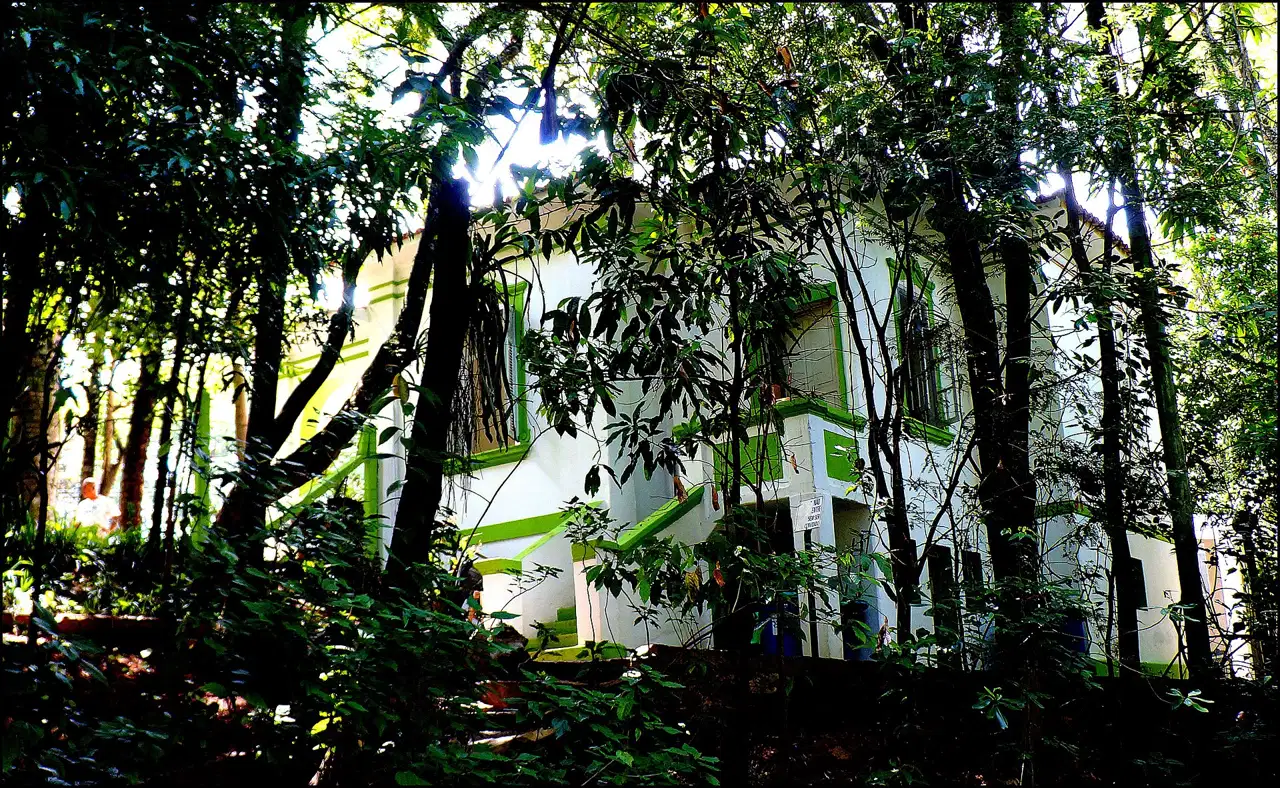
The Bosque neighborhood lies in the central region of Campinas and takes its name from the city's oldest park, the Bosque dos Jequitibás. It is a predominantly residential neighborhood, bordering Cambuí and Jardim Proença, that is seeing more high-rise construction without losing the green landmark that gives it its name.
The neighborhood and its name
"Bosque" is the name under which the park's neighborhood appears, for example, in Sanasa notices and in the description of the Bosque dos Jequitibás itself, located in the central region. Jardim Proença, often associated with the area, is a neighboring district organized around Avenida Princesa D'Oeste and the Estádio Moisés Lucarelli. Rua Coronel Quirino, one of the best-known streets in Cambuí, extends all the way to the Bosque: the address of the park and its facilities is Rua Coronel Quirino, 2.
The Bosque dos Jequitibás
The park dates back to the 19th century, on the property of Francisco Bueno de Miranda, who in 1880 decided to turn it into a public recreation area. The landscape design, in the English garden style, is attributed to Ramos de Azevedo. Emperor Dom Pedro II visited the site in 1886. In 1915, the Campinas city government took over the area, which became public.
The Bosque covers about 10 hectares, including an Atlantic Forest reserve, and receives about one million visitors a year. It is open Tuesday through Sunday, from 6 a.m. to 6 p.m., with free admission.
Heritage listing and rules for the surrounding area
The Bosque dos Jequitibás was listed as a heritage site by Condephaat in 1970, the first listed property in the municipality. In 1993, Condepacc listed the surrounding area and prohibited buildings of more than two stories within a 100-meter radius of the park. This rule is decisive for anyone planning to buy or build on the nearest blocks.
Zoo, museum and aquarium
The Bosque zoo was recognized by Ibama in 1995 as a conservation facility for wild species and is home to more than 300 animals, many rescued from trafficking or abuse. The same address houses the Museu de História Natural de Campinas, with free admission, the Aquário Municipal and the Teatro Infantil Carlito Maia children's theater. The park also preserves the Casa do Caboclo, an example of a rustic wattle-and-daub dwelling.
Daily life in the neighborhood
The open-air market takes place on Wednesdays, from 6 a.m. to noon, on Rua Maria das Dores Souza Coelho Barros. Longtime residents, such as those on Rua Uruguaiana, have watched apartment buildings arrive in a neighborhood that used to be made up of houses. Nearby, Vila Lemos has the Bosque São José, another green space in the area.
Living and investing in Bosque
The property profile includes single-story homes and townhouses on residential streets, apartment buildings from different eras and commercial properties on the busier streets. On the blocks immediately surrounding the park, the height limit set by the heritage listing restricts the construction of apartment buildings.
The neighborhood suits families with children, those who want to live close to downtown and Cambuí on quieter streets, and those who value having a park just steps from home. For investors, the central location and the height restrictions around the park are factors that affect supply and should be assessed lot by lot.
More in Neighborhoods
Sources consulted (4)
- Bairro Bosque preserves history, nature and quality of life (ACidade ON, 2026) (acidadeon.com)
- Bosque dos Jequitibás (Wikipedia) (pt.wikipedia.org)
- Jardim Proença: discover stories from the neighborhood's residents (ACidade ON, 2023) (acidadeon.com)
- Water Supply Will Be Interrupted This Sunday (Sanasa, 2009) (sanasa.com.br)
Information verified on 30/10/2026. Found something outdated? Let our team know.


