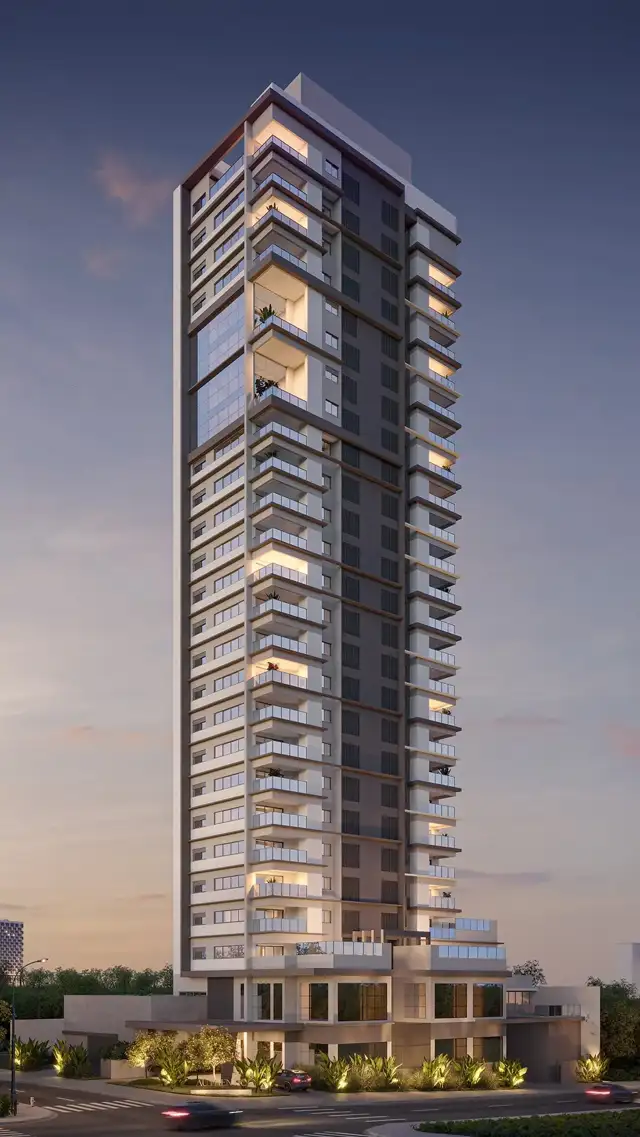
Cambuí is one of the best-known neighborhoods in Campinas. Located in the central region, between the Via Norte-Sul and the Centro de Convivência Cultural, it brings together residential buildings, street-level shops, restaurants, hotels, schools and cultural venues within just a few blocks.
From Cambuí Thicket to a Neighborhood of High-Rises
The name comes from the cambuí shrubs that lined a path near today's Rua Coronel Quirino; residents came to call the area the "cambuizal". In the 18th century, the urban core of Campinas grew out of a few open fields, one of which occupied the site of today's Praça 15 de Novembro, the former Largo de Santa Cruz, through which travelers passed between São Paulo and Goiás.
With the arrival of the Paulista and Mogiana railways in the 1870s, local elite families began settling in the area on country estates. Grand mansions followed in the early 20th century. The major turning point came in the 1950s and 1960s, when rapid vertical growth transformed the neighborhood of mansions into one dominated by buildings.
The Centro de Convivência Returns to the Neighborhood
Cambuí's main cultural venue is the Centro de Convivência Cultural de Campinas, on Praça Imprensa Fluminense. Designed by the architect Fábio Penteado, it opened on September 9, 1976. The complex was closed in 2011 and underwent a complete renovation, delivered by the city government in July 2025, with a total investment of R$ 62.4 million, of which R$ 30 million came from the state government.
After the renovation, the Teatro de Arena can hold 3,200 people and the Teatro Luís Otávio Burnier has 520 seats. The complex also has 6 rooms, 4 galleries, 10 dressing rooms, an orchestra pit and simultaneous translation and audio description capabilities. The reopening was planned in stages.
The same square hosts the arts, crafts and snacks fair known as the Feira Hippie, on Saturdays and Sundays.
Streets, Bars and Neighborhood Life
Among the best-known streets are Rua Maria Monteiro, Rua Coronel Quirino, Avenida Orozimbo Maia, the Via Norte-Sul and Avenida Júlio de Mesquita, which is more tree-lined than the city's average street. On Júlio de Mesquita stands City Bar, opened in July 1968 and the sole survivor of a stretch that once had twelve bars, known as the "Setor".
The Paróquia Nossa Senhora das Dores is a landmark for anyone getting around the neighborhood. Between 1996 and 2010, city works known as the "Rótula" changed the direction of several streets to organize traffic in the central region, which still shapes how people move around Cambuí.
The Neighborhood
Cambuí is part of the central region. Rua Coronel Quirino leads to the Bosque neighborhood, home to the Bosque dos Jequitibás. On the other side, Guanabara is described by longtime residents as "an extension of old Cambuí". Also nearby are Vila Estanislau, where Avenida Orozimbo Maia meets the Via Norte-Sul, and Jardim Novo Cambuí, at the junction with Taquaral, Jardim Bela Vista and Chácara da Barra.
Living and Investing in Cambuí
The property profile is predominantly vertical: apartments in buildings from different eras, from the first high-rises of the verticalization period to recent construction, as well as offices and storefronts for retail and services. The remaining houses coexist with clinics, offices and restaurants.
The neighborhood suits those who want to handle daily life on foot, value cultural and dining options and prefer to live near the city center. For investors, the mix of housing, retail and services sustains steady demand for apartments and commercial spaces. Those seeking absolute quiet should consider the specific street, as some concentrate bars and nightlife.
More in Neighborhoods
Sources consulted (5)
- Cambuí, Campinas (Wikipedia) (en.wikipedia.org)
- After 14 years, Centro de Convivência Cultural de Campinas reopens (Campinas.com.br, 2025) (campinas.com.br)
- Centro de Convivência Cultural de Campinas (Wikipedia) (pt.wikipedia.org)
- Cambuí: discover stories from residents and merchants (ACidade ON, 2024) (acidadeon.com)
- From historic train station to commercial hub: the Guanabara neighborhood (ACidade ON, 2025) (acidadeon.com)
Information verified on 30/10/2026. Found something outdated? Let our team know.